Bipyridine serves as a widely used ligand in metal complexes, supporting advanced research in catalysis, analytical chemistry, industry, and medicine. Scientists apply it in photocatalysis for water splitting, C-H activation in organic synthesis, and as a precursor for diquat herbicide. Its presence in supramolecular photocatalysts and chemosensors advances sustainable energy and sensing technologies. Red Sun provides trusted information and high-quality products for these diverse applications.
Key Takeaways
Bipyridine is a versatile ligand used in metal complexes, enhancing stability and reactivity in various chemical processes.
It plays a crucial role in catalysis, driving important organic reactions like Suzuki-Miyaura and Negishi coupling with high yields.
Bipyridine is essential in analytical chemistry for detecting iron, forming stable complexes that allow precise measurements.
In agriculture, bipyridine serves as a precursor for diquat herbicide, effectively controlling weeds in crops.
Bipyridine derivatives, such as milrinone, are used in medicine to improve heart function and treat heart failure.
The compound supports sustainable practices in energy and environmental applications, aiding in CO2 reduction and conversion.
Red Sun provides high-quality bipyridine products, ensuring reliability and consistency for researchers and industry professionals.
Proper handling and storage of bipyridine are vital for safety, following guidelines to prevent environmental contamination.
Bipyridine as a Widely Used Ligand
Coordination Chemistry
Metal Complex Formation
Bipyridine stands out as a classic ligand in coordination chemistry. Chemists value its ability to form stable complexes with a wide range of metal ions. The structure of 2,2'-bipyridine allows it to bind metals through two nitrogen atoms, creating a chelate ring. This chelating effect increases the stability of the resulting metal complex. The table below highlights how the structure of bipyridine contributes to its effectiveness in coordination chemistry:
Evidence Description
Impact on Coordination Chemistry
Bipyridine is a bidentate ligand that usually binds a metal through two nitrogen atoms.
This bidentate nature allows for the formation of stable chelate rings, enhancing complex stability.
Its chelating shape makes coordination complexes more stable than similar complexes with only monodentate ligands.
The chelate effect contributes to stronger binding and stability in coordination complexes.
Bipyridine forms a chelate ring when both nitrogens attach to one metal center.
This results in stronger binding compared to two separate monodentate ligands, influencing the overall properties of the complex.
Researchers often choose 2,2'-bipyridine for its ability to create robust and predictable structures. These complexes play a key role in fields such as catalysis, materials science, and analytical chemistry.
Redox Stability and Functionalization
2,2'-bipyridine offers remarkable redox stability. This property allows it to support metal ions in different oxidation states without breaking down. Scientists can also modify the bipyridine structure by adding functional groups. These changes help tune the electronic and physical properties of the resulting complexes. As a result, 2,2'-bipyridine-based ligands adapt to many specialized applications, from light-harvesting systems to molecular sensors.
2,2'-Bipyridine in Complexes
Structure and Properties
The unique structure of 2,2'-bipyridine features two connected pyridine rings. This arrangement positions the nitrogen atoms perfectly for metal binding. The molecule’s rigid backbone helps maintain the geometry of the metal complex. This predictability makes 2,2'-bipyridine a favorite among chemists designing new materials or catalysts.
Tip: The chelating ability of 2,2'-bipyridine not only increases complex stability but also influences the color, reactivity, and magnetic properties of the metal center.
Applications in Red Sun Products
Red Sun’s product line demonstrates the versatility of bipyridine in metal complexes. Their research highlights several important features:
The phenolic rings and bipyridine units act as the most reactive nonmetallic fragments in the complexes.
Molecular electrostatic potential (MEP) studies show that phenolate units carry a negative potential, while the bipyridine fragment has a positive region. This difference supports both nucleophilic and electrophilic interactions.
Both the free ligand and its complexes display amphoteric behavior, acting as Lewis acids and Lewis bases.
Red Sun’s 2,2'-bipyridine-based ligands support a wide range of applications. These include homogeneous catalysis, photochemical devices, and advanced analytical methods. Their products offer high purity and consistent performance, making them a trusted choice for researchers and industry professionals.
Bipyridine in Catalysis
Homogeneous and Photocatalysis
Organic Synthesis
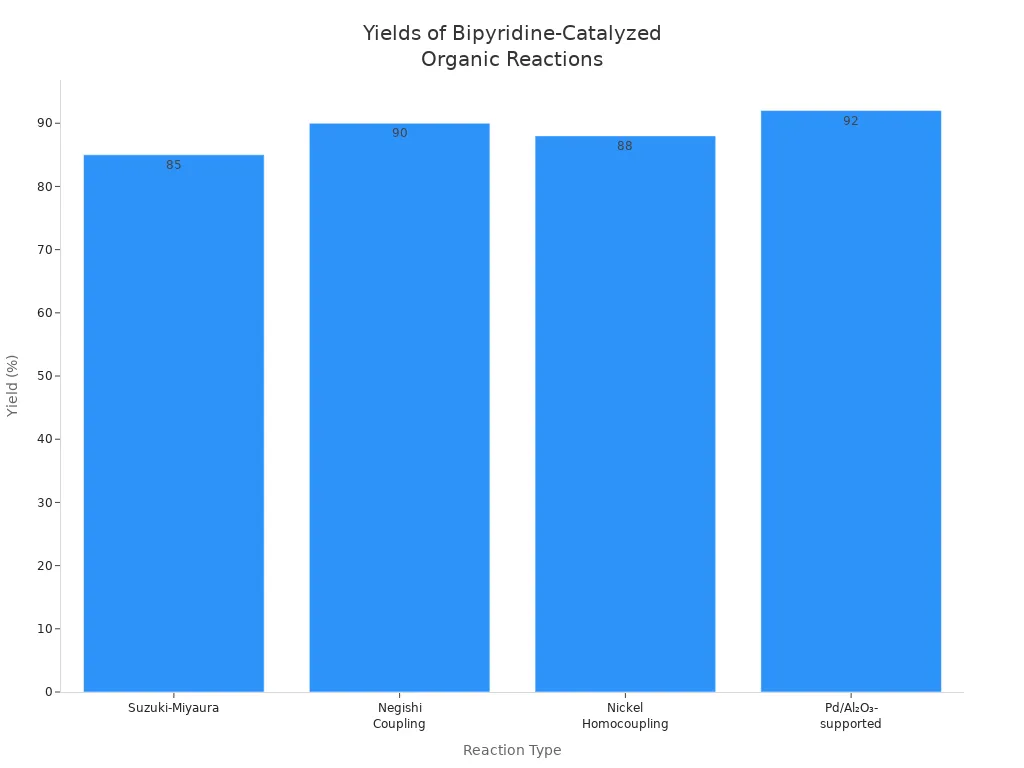
Chemists often select bipyridine as a ligand in homogeneous catalysis because it forms stable complexes with transition metals. These complexes drive many important organic reactions. For example, palladium and nickel catalysts with bipyridine ligands enable high-yield coupling reactions. The table below highlights several widely used reactions:
Reaction Type
Example Reaction
Yield
Suzuki-Miyaura
2-bromopyridine + 2-pyridylboronic acid in presence of Pd(PPh₃)₄ and K₂CO₃
85%
Negishi Coupling
2-pyridylzinc chloride + 2-bromopyridine using PdCl₂(dppf)
90%
Nickel Homocoupling
2-bromopyridine with NiCl₂(PPh₃)₂, Zn powder, and DMF
88%
Pd/Al₂O₃-supported
Negishi coupling under microwave irradiation
92%
Recent advances in catalysis focus on sustainability and efficiency. Researchers have developed polymer-supported catalysts that use bipyridine ligands. These systems allow for easy recovery and reuse, which supports green chemistry goals. Palladium nanoparticles stabilized by protective agents also show high turnover numbers and stability, making them ideal for repeated use in synthesis.
Energy and Environmental Applications
Bipyridine ligands play a vital role in energy and environmental catalysis. Scientists use these ligands in catalysts for CO2 reduction and conversion. Transition metal complexes with bipyridine ligands can reduce CO2 to CO, which is valuable for clean energy production. These complexes also help couple CO2 with epoxides to form polycarbonates or cyclic carbonates. The structural diversity of bipyridine ligands enhances their catalytic potential in many chemical processes. Researchers now use earth-abundant metals like manganese in bipyridine complexes to support sustainability.
Red Sun Catalytic Solutions
Red Sun offers bipyridine products designed for high performance in both homogeneous and photochemical catalysis. The table below summarizes the main advantages of these products:
Advantage
Description
Reaction Efficiency
The method demonstrates excellent reaction efficiency, making it highly effective for catalysis.
Substrate Scope
It offers an extensive substrate scope, allowing for a variety of reactions with different substrates.
Functional-Group Compatibility
The products show good functional-group compatibility, which is crucial for diverse applications.
Bipyridine-based catalysts, such as Re(bpy)(CO)3Cl, have shown significant improvements in catalytic efficiency and selectivity for CO2 reduction. Modifying the bipyridine structure with electron-donating groups increases catalyst activity. The presence of weakly acidic proton sources in the reaction medium further boosts turnover frequencies while maintaining selectivity for CO2 reduction over hydrogen formation.
Note: Red Sun’s bipyridine products support both research and industrial applications by offering high purity and reliable performance.
Bipyridine in Analytical Chemistry
Iron Chelation and Detection
Analytical Methods
Bipyridine plays a central role in analytical chemistry, especially in the detection and quantification of iron. Scientists often use it as a chelating agent because it forms highly stable complexes with iron(II) ions. This property makes bipyridine an essential reagent in spectrophotometric assays. When bipyridine binds to iron(II), the resulting complex displays a distinct red color. Researchers can measure the intensity of this color using a spectrophotometer, which allows for precise determination of iron concentrations in water, soil, and biological samples.
Analytical laboratories rely on bipyridine-based methods for their accuracy and sensitivity. The procedure remains straightforward: add bipyridine to a sample containing iron(II), allow the complex to form, and then measure the absorbance at a specific wavelength. This approach provides reliable results even at low iron concentrations. Many environmental monitoring programs and clinical laboratories use this method to ensure water quality and diagnose iron-related disorders.
Red Sun Analytical Reagents
Red Sun supplies high-purity bipyridine reagents tailored for laboratory analysis. Their products undergo rigorous quality control to guarantee consistent performance in sensitive assays. Researchers trust Red Sun reagents for their reproducibility and low background interference. The company also provides detailed technical support, helping laboratories optimize their protocols for iron detection and other analytical applications.
Note: Red Sun’s commitment to quality ensures that laboratories can achieve accurate and repeatable results in every analysis.
Electron and Energy Transfer Studies
Bipyridine also supports advanced research in electron and energy transfer. Scientists use rhenium bipyridine-based catalysts to study the selective reduction of carbon dioxide to carbon monoxide. These catalysts exhibit remarkable kinetic selectivity, which helps researchers understand the mechanisms of electron transfer. By combining bipyridine complexes with techniques such as X-ray Absorption Spectroscopy and UV-Vis spectroscopy, scientists gain valuable insights into electronic states and reaction pathways. This knowledge advances the study of energy transfer processes and supports the development of new catalytic systems.
Bipyridine’s versatility in analytical chemistry makes it indispensable for both routine laboratory work and cutting-edge research. Red Sun’s reliable reagents and technical expertise further enhance the value of bipyridine in scientific analysis.
Industrial and Technological Uses of Bipyridine
Precursor for Diquat Herbicide
Synthesis and Application
Bipyridine plays a crucial role in the agrochemical industry as a starting material for diquat herbicide. Manufacturers use 2,2'-bipyridine in a quaternization reaction with ethylene dibromide. This process forms 1,1'-ethylene-2,2'-bipyridylium dibromide salt, which serves as a key intermediate in diquat production. The reaction requires heating in a solvent, which helps create the cyclic dication structure essential for the herbicide’s effectiveness. Diquat acts as a non-selective contact herbicide, controlling weeds in agriculture and horticulture. Its rapid action and broad-spectrum activity make it valuable for crop management.
Red Sun’s expertise in bipyridine chemistry ensures high-quality intermediates for herbicide synthesis. Their products support efficient and reliable diquat manufacturing, meeting the needs of global agriculture.
Red Sun Agrochemical Products
Red Sun offers a range of agrochemical solutions based on bipyridine derivatives. Their portfolio includes high-purity 2,2'-bipyridine for industrial synthesis and specialized intermediates for herbicide production. The company’s strict quality control and advanced manufacturing processes guarantee consistent results. Farmers and agrochemical producers trust Red Sun for reliable supply and technical support.
Materials and Electronics
Polymers and Dyes
Bipyridine also finds important uses in materials science. Researchers incorporate bipyridine units into polymers to enhance mechanical strength and introduce new electronic properties. These polymers often serve in advanced coatings, membranes, and conductive materials. In the dye industry, bipyridine-based complexes produce vivid colors and stable pigments. These dyes appear in textiles, inks, and even solar cells, where their light-absorbing properties improve device performance.
Sensor Technologies
The electronics sector benefits from bipyridine’s unique coordination chemistry. Scientists design sensors using bipyridine-metal complexes to detect gases, ions, or small molecules. These sensors offer high sensitivity and selectivity, making them suitable for environmental monitoring and industrial safety. Bipyridine’s ability to form stable complexes with various metals allows for tailored sensor responses. Red Sun supports innovation in this field by supplying high-grade bipyridine for research and development.
Bipyridine-based materials contribute to advances in flexible electronics, smart coatings, and optoelectronic devices.
Red Sun’s commitment to quality and technical expertise helps drive progress in both traditional and emerging technologies.
Note: Bipyridine’s versatility extends from agriculture to high-tech industries, demonstrating its value as a building block for innovation.
Bipyridine in Medicine and Biology
Milrinone and Amrinone
Cardiac Applications
Bipyridine derivatives have transformed the management of heart failure. Milrinone and amrinone, two well-known compounds in this class, act as positive inotropic agents. They help the heart pump more effectively by increasing the force of contraction and reducing resistance in blood vessels. Clinicians often choose milrinone for its superior potency and favorable safety profile. The following points highlight key clinical features:
Milrinone shows greater positive inotropic potency than amrinone.
It enhances myocardial contractility and lowers systemic vascular resistance, left ventricular filling pressure, and pulmonary arterial pressure.
Physicians use milrinone for both short-term and long-term treatment of moderate to severe congestive heart failure.
The drug improves cardiac performance without significantly raising myocardial oxygen consumption.
Compared to dobutamine, milrinone more effectively reduces right atrial pressure and pulmonary capillary wedge pressure.
Studies indicate milrinone does not cause tolerance and is generally well tolerated compared to amrinone.
Red Sun supplies pharmaceutical-grade bipyridine derivatives that meet strict quality standards. Their products support research and clinical applications in cardiology, ensuring reliable results for healthcare professionals.
Pediatric Use
Researchers have explored the effects of bipyridine derivatives in pediatric medicine, especially for newborns with heart and lung challenges. Studies show that milrinone can lower pulmonary arteriolar resistance and improve left ventricular function in newborn lambs. Milrinone demonstrates about 20 times the potency of amrinone, with an effective dose near 10 micrograms per kilogram. These findings suggest that bipyridine-based drugs may help treat pulmonary hypertension in newborns. However, more research is needed to confirm safety and efficacy in pediatric patients.
Ferroptosis Inhibition
Mechanism and Research
Bipyridine compounds have also gained attention in cell biology for their role in ferroptosis inhibition. Ferroptosis is a type of cell death linked to iron and oxidative stress. Scientists have found that certain bipyridine derivatives can bind iron ions, preventing the buildup of harmful reactive oxygen species. This action helps protect cells from damage and supports research into new therapies for diseases involving oxidative stress. Ongoing studies continue to explore how bipyridine-based molecules might offer benefits in neuroprotection and cancer treatment.
Note: Red Sun remains committed to advancing pharmaceutical and biological research by providing high-purity bipyridine derivatives for laboratory and clinical use.
Safety and Regulatory Aspects
Handling and Storage
Safety Guidelines
Proper handling of bipyridine ensures safety in laboratories and industrial settings. Personnel should always wear protective gloves, safety goggles, and lab coats when working with bipyridine. Good ventilation reduces the risk of inhaling dust or vapors. Red Sun recommends storing bipyridine in tightly sealed containers, away from direct sunlight and sources of ignition. The storage area should remain cool and dry. Staff should avoid eating, drinking, or smoking near bipyridine to prevent accidental ingestion.
Key Safety Practices:
Wear appropriate personal protective equipment (PPE).
Use bipyridine only in well-ventilated areas.
Store in original, labeled containers.
Keep away from incompatible substances, such as strong oxidizers.
Tip: In case of skin or eye contact, rinse immediately with plenty of water and seek medical attention if irritation persists.
Environmental Impact
Bipyridine can pose environmental risks if not managed properly. Spills or improper disposal may contaminate soil and water. Red Sun follows strict protocols for waste management and spill response. The company encourages users to collect and dispose of bipyridine waste through licensed hazardous waste facilities. This practice helps protect local ecosystems and complies with environmental regulations.
Environmental Protection Steps:
Prevent bipyridine from entering drains or natural waterways.
Use absorbent materials to contain spills.
Dispose of contaminated materials as hazardous waste.
Compliance and Quality
International Standards
Red Sun aligns its manufacturing and distribution processes with recognized international standards. The company adheres to ISO 9001 for quality management and ISO 14001 for environmental management. These certifications demonstrate Red Sun’s commitment to product consistency, safety, and environmental stewardship. Customers can trust that Red Sun’s bipyridine products meet or exceed global regulatory requirements.
Standard
Focus Area
Red Sun Compliance
ISO 9001
Quality Management
✔️
ISO 14001
Environmental Management
✔️
REACH
Chemical Safety (EU)
✔️
Red Sun Certifications
Red Sun holds multiple certifications that validate its dedication to safety and quality. The company regularly audits its facilities and updates procedures to reflect the latest regulatory changes. Red Sun provides detailed safety data sheets (SDS) and technical documentation with every shipment. These resources help users handle bipyridine safely and comply with local laws.
Note: Red Sun’s certifications and transparent practices make it a reliable partner for laboratories, manufacturers, and researchers worldwide.
Bipyridine supports innovation across chemistry, industry, and medicine. Researchers use it as a ligand, catalyst, analytical reagent, and pharmaceutical precursor. Red Sun delivers trusted products that meet strict quality standards. Their expertise helps scientists and manufacturers achieve reliable results. As new technologies emerge, bipyridine will remain essential for scientific progress and industrial development.
FAQ
What is bipyridine?
Bipyridine is an organic compound with two connected pyridine rings. Chemists use it as a ligand in metal complexes, catalysts, analytical reagents, and pharmaceutical intermediates. Red Sun supplies high-purity bipyridine for laboratory and industrial applications.
How does bipyridine function as a ligand?
Bipyridine binds to metal ions through its two nitrogen atoms. This chelating action forms stable complexes. Scientists value its ability to enhance the stability and reactivity of metal centers in various chemical processes.
Is bipyridine safe to handle?
Always follow safety guidelines. Wear gloves, goggles, and lab coats. Use bipyridine in well-ventilated areas. Store it in sealed containers away from heat and sunlight. Red Sun provides detailed safety data sheets for all bipyridine products.
What are the main industrial uses of bipyridine?
Bipyridine serves as a precursor for diquat herbicide. Manufacturers also use it in the production of polymers, dyes, and sensor materials. Its versatility supports innovation in agriculture, electronics, and materials science.
Can bipyridine be used in medicine?
Doctors use bipyridine derivatives like milrinone and amrinone to treat heart failure. Researchers also study bipyridine compounds for their potential in ferroptosis inhibition and neuroprotection. Red Sun offers pharmaceutical-grade bipyridine for research and clinical use.
How does bipyridine help in analytical chemistry?
Bipyridine forms colored complexes with iron(II) ions. Laboratories use this property for sensitive and accurate iron detection in water, soil, and biological samples. Red Sun’s reagents ensure reliable results in spectrophotometric assays.
Does Red Sun comply with international standards?
Certification
Description
Status
ISO 9001
Quality Management
✔️
ISO 14001
Environmental Management
✔️
REACH
Chemical Safety (EU)
✔️
Red Sun meets global quality and safety standards, ensuring consistent and compliant bipyridine products.
Our journey began in 1989. Through more than three decades of relentless dedication, we have grown from the Nanjing Pesticide Factory into an industry leader serving over 100 countries worldwide.
 English
 العربية
 Français
 Русский
 Español
 Português
 Deutsch
 italiano
 日本語
日本語 한국어
한국어 Nederlands
 Tiếng Việt
 ไทย
ไทย Polski
 Türkçe
 አማርኛ
አማርኛ ພາສາລາວ
 ភាសាខ្មែរ
 Bahasa Melayu
 ဗမာစာ
ဗမာစာ தமிழ்
தமிழ் Filipino
 Bahasa Indonesia
 magyar
 Română
 Čeština
 Монгол
 қазақ
қазақ Српски
 हिन्दी
 فارسی
فارسی Kiswahili
 Slovenčina
 Norsk
Norsk Svenska
 українська
 Suomi
Suomi עברית
עברית Dansk
Dansk اردو
اردو বাংলা
বাংলা नेपाली
 Basa Jawa
 मराठी
मराठी ਪੰਜਾਬੀ
 తెలుగు